
23rd December 2025
Written by: Charlotte Davies
Battery fires aren’t rare, freak accidents. They’re happening every day, in bin lorries and recycling centres and almost all of them start the same way: a battery or electrical item being thrown in the wrong bin.
Behind every statistic is a real moment of danger. A driver forced to dump a burning load onto the road, a recycling worker watching smoke pour from a conveyor belt or firefighters dealing with unpredictable blazes.
The case studies below come from people who have experienced this problem first-hand. From waste and recycling teams on the frontline, to fire officers responding to urgent incidents, to residents whose lives have been disrupted by smoke and road closures.
Together, these stories show that binned batteries and electricals are a growing fire risk that threatens people, property, and essential services and can be stopped if we dispose of batteries and electricals safely.
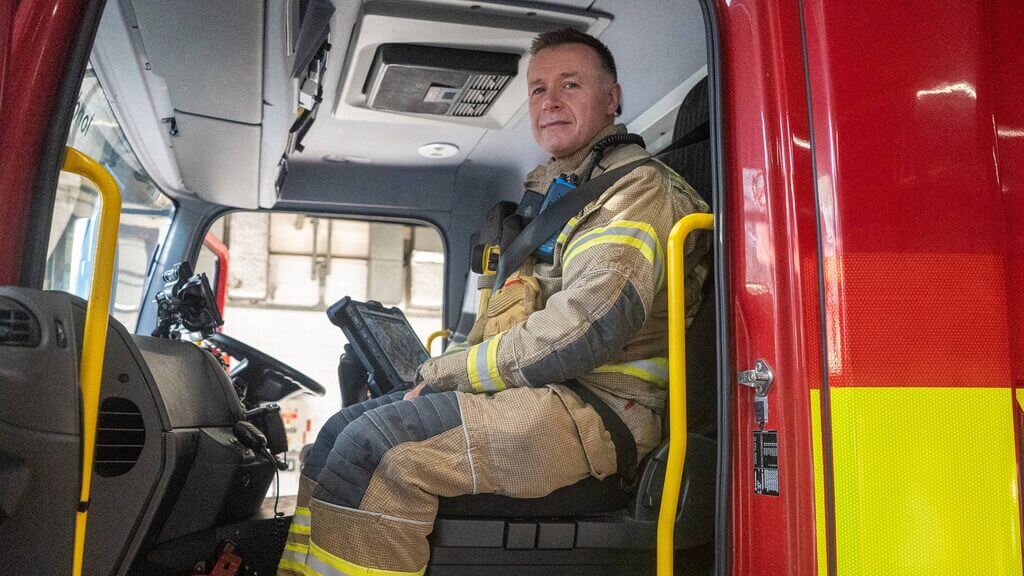
Steven Dasgupta from London Fire Brigade
Steven Dasgupta is London Fire Brigade Sub-Officer based at Mitcham Fire Station. Steven has attended some notable waste centre fires, including an incident at a waste disposal site in Wimbledon last year. The incident was protracted, lasting around four days, with tonnes of rubbish needing removing from within a building to open air to allow firefighters to fully extinguish all of the fire. Steven was part of the relief crew deployed the day after the initial outbreak, focusing his efforts on accessing and relieving deep-seated pockets of fire that were prolonging the incident. The fire had a significant impact on the local community and environment, with residents asked to keep windows and doors closed and a school having to close due to smoke travel. The official cause of this fire was recorded as undetermined but was an example of how impactful waste fires can be when they occur.
“I was part of the relief effort at a large waste centre fire in Wimbledon last year, which was one of the most complex fires of this nature that I have attended. We focused our efforts on reaching and extinguishing deep-seated pockets of fire that were prolonging the incident for days. This wasn’t just a simple bin fire, it was a large-scale response that lasted four days and had a significant impact on the local community as well as our own resources. As is often the case with waste fires, the Brigade was unable to determine an official cause but this fire was an example of how disruptive and impactful waste fires can be. We must all take extra care to help prevent waste fires from happening in the first place. We know that the unsafe disposal of lithium-ion batteries and products is contributing to a greater number of waste fires so we must all take responsibility and dispose of our batteries correctly. Instead, make sure to recycle them properly and help reduce the risk of fires.”

Shawn Howlett from London Fire Brigade
Station Officer Shawn Howlett is based at Soho Fire Station in Central London. He has served at London Fire Brigade for over 30 years. Shortly before 5.30 am on 17 January 2025, Shawn was mobilised to a bin lorry alight on John Adam Street in Soho in Central London. The fire crews, alongside 4 fire engines, were on scene for over 4 hours attempting to fully extinguish the fire. They suspected a lithium-ion battery was responsible for the fire. This fire was particularly challenging because the bin lorry suffered a power failure following the fire and the rubbish had not been tipped prior to firefighters’ arrival. Shawn Howlett is passionate about this growing issue and has been working with waste operators to share best practice to aid firefighter response when these fires occur. But most importantly he is keen to encourage people this festive season and beyond to recycle unwanted electricals responsibly.
“In over thirty years at the fire service, one of the most complex suspected battery fires I attended was earlier this year when a bin lorry caught alight on John Adam Street in Central London. Fortunately, the fire happened in the very early hours of the day so the impact wasn’t as bad as it might have been for the local community. Battery fires are becoming increasingly common. These are usually lithium-ion batteries, which are volatile, reignite suddenly and produce an extremely toxic smoke which should never be inhaled. In particular, waste battery fires can be completely avoidable. The public needs to understand the risks of throwing away their batteries and electrical items in their everyday rubbish. The batteries end up becoming crushed in bin lorries or at waste sites and that is what triggers these fires. For us at the fire service, these incidents on occasion can tie up a huge amount of resources which affects our ability to be able to respond to other emergencies. My Christmas wish is for people to be aware to always recycle, and to never bin their batteries.”
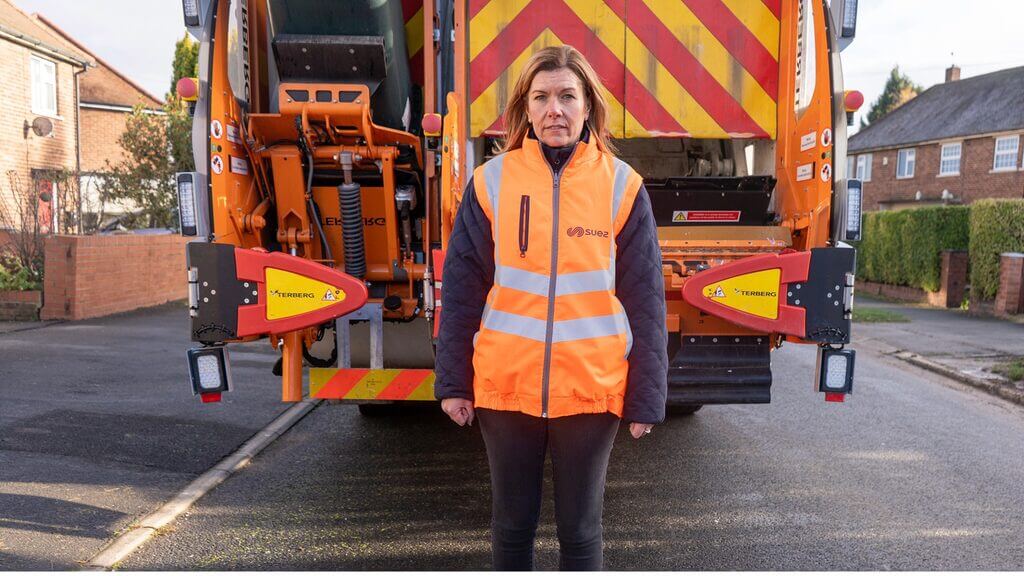
Ricky Taylor and Ian Robinson from Suez
Ricky is a bin lorry loader, and Ian is a bin lorry driver at SUEZ in Doncaster, working within the city and surrounding areas. So far they have experienced three battery fires each this year.
Ricky said: “A fire in the back of a collection vehicle is one of the things we dread most. A battery fire can go from nothing to a full-blown blaze in seconds, putting not just me but the whole crew at risk. In a recent incident, we were told to eject the waste onto the road to stop the fire spreading – this is the safest way to prevent the lorry and its fuel from making the fire worse. The fire brigade attended, checked everything over and advised we could reload the waste… but the fire restarted because the battery was still smouldering. We had to empty the entire load in a residential street while fire crews stayed to make sure it didn’t reignite. It’s really important people realise how common these fires are becoming. Unless we get the message out, more people are at risk of getting seriously hurt.”

Kamila Walczak from SWEEEP
Kamila works in the Secured Department at SWEEEP, a dedicated waste electrical recycling facility, where she focuses on the safe destruction of data and the critical removal of batteries from electrical waste. The volume of e-waste that Kamila experiences is constantly large, although the Christmas season brings a noticeable increase in items like games consoles, smartphones and earphones, as well as Christmas fairy lights and electrical toys. Kamila frequently sees items discarded, especially in FastTech items where the battery is often glued in.
“When recycling any electrical item, if you can, make sure the battery is removed from the item so that there’s less chance of it being missed and ending up in the wrong waste stream. Most importantly, always recycle electrical waste separately from household recycling or rubbish. Companies like SWEEEP are the correct place for electricals to get recycled safely but we can only do that when they are safely recycled.”

Danni Kelly from Suez
Danni Kelly is an Assistant Contract Manager at the SUEZ branch in Doncaster, where she oversees their operations across refuse, recycling, green waste, and trade waste collections. Danni has first hand experience with working during the Christmas period, where the waste they receive massively goes up. This means her teams have to be more vigilant about preventing waste fires, which they do through using thermal cameras and CCTV to detect smoke smouldering or a fire both within vehicles or at their sites.
Earlier this year, Danni experienced a fire from a battery-powered electrical which caused a fire in one of their bin collection lorries. The fire services were alerted and the crew were instructed to eject the load onto the road to prevent the fire spreading.
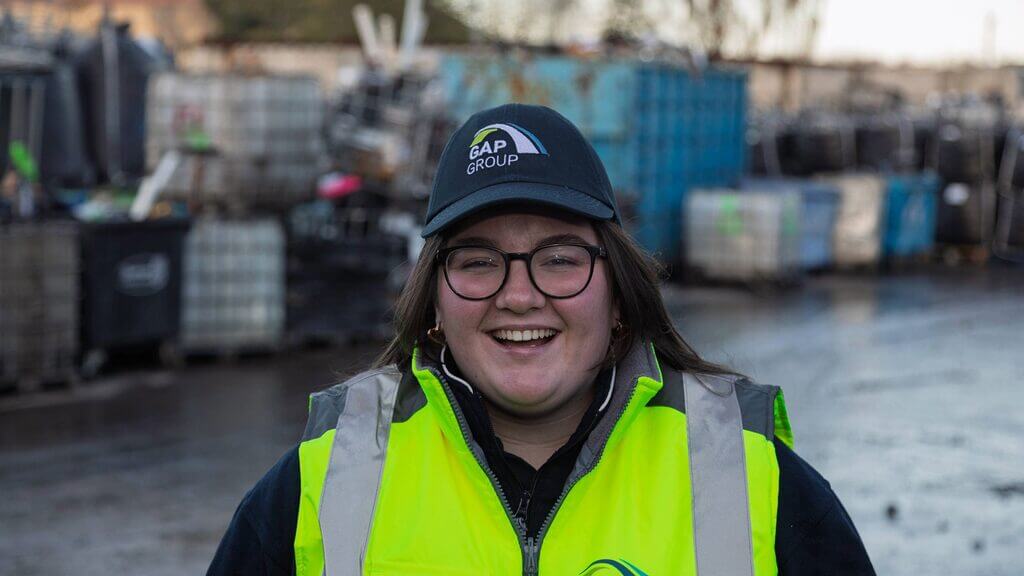
Annabelle Warren from GAP
Annabelle Warren, Commercial Manager at GAP, a specialist nationwide waste electrical recycling plant, supports their waste electrical box service for collecting broken electricals. Her role involves coordinating the distribution and collection of recycling boxes for retailers and offices, and inspecting the electricals for contamination (like packaging and batteries) before they get recycled. She also provides education to companies on the correct ways to recycle electricals and batteries. Annabelle has noticed there’s a major surge in volume in waste electricals over the festive season, with a huge influx of Christmas FastTech, such as fairy lights, light-up snowmen, and electrical kids’ toys, even electrical turkey carving knives, leading to a higher demand for recycling box exchanges from retailers as people discard old or broken electricals.
“When recycling any electrical item, if you can, make sure the battery is removed from the item so that there’s less chance of it being missed and ending up in the wrong waste stream. Most importantly, always recycle separately from household recycling. Battery fires pose the biggest risk to the waste management and recycling sector, ensuring batteries are removed from Christmas tree lights, for example, prior to recycling, and disposed of separately at a battery recycling point, is a simple step we can all take to help mitigate that risk.”
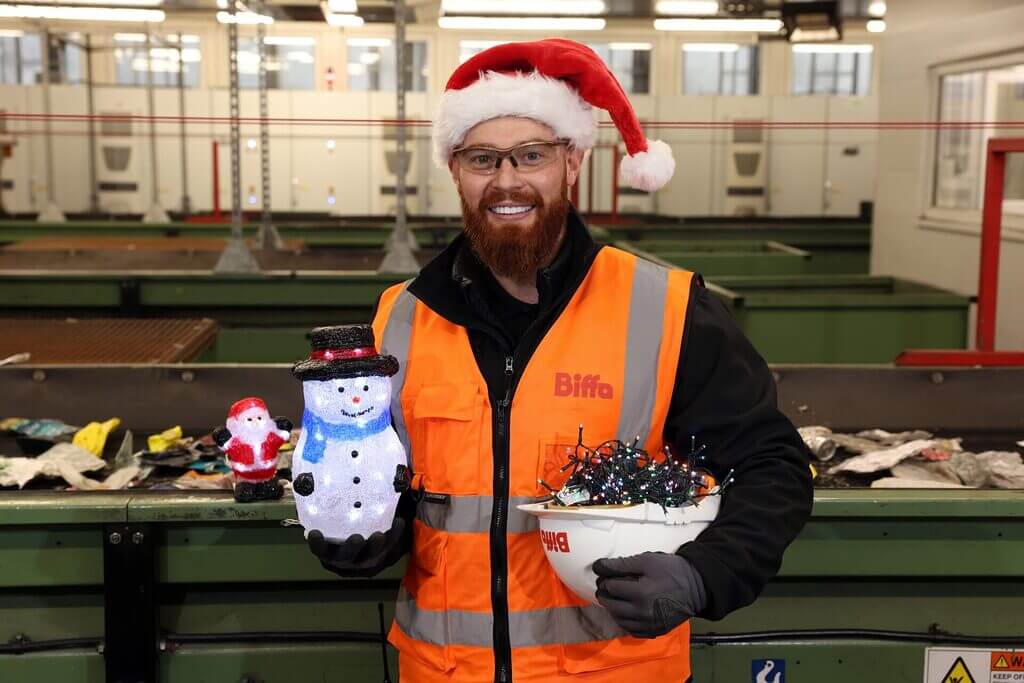
Luke Walter from Biffa
Luke Walter is a Regional Manager at BIFFA covering Aldridge through to Hull, where he oversees day-to-day operations, safety protocols, and the coordination of waste-processing activities across the facility. Luke has first-hand experience working within a high-volume waste environment, where the risks associated with hazardous items being incorrectly disposed of, particularly batteries and vapes, continue to rise. His teams remain vigilant through routine safety checks, monitoring systems, and strict procedures designed to reduce the likelihood of fires on-site.
Earlier this year, Luke was on-site during two significant fires at the Aldridge facility: one in January and another in July. The January incident, caused by a lithium-ion vape, resulted in extensive damage and forced the site into a six-month rebuild. The second fire took place in July, triggered by a battery that had been incorrectly disposed of within the cardboard waste stream. In both cases, Luke witnessed the impact of the fires first-hand, working alongside Biffa colleagues as emergency services were called, crews responded, and the situation was brought under control.
Since these incidents, Luke has been vocal about the growing issue of battery-related fires within the waste sector. He continues to raise awareness about the importance of correctly disposing of batteries, vapes, and small electronic items – emphasising how one incorrectly discarded item can put staff, local residents, and the entire facility at risk.
“Our busiest months are always Christmas into January, and unfortunately that’s also when the risk of fires increases the most. With the spike in waste, more batteries and vapes end up in the wrong place, and they can ignite without warning once they’re compacted. After seeing two fires on-site this year, I want to urge everyone to take a moment to dispose of these items properly. A single battery in the recycling stream can shut down an entire facility and put people in danger.”
Sammy Hunter from EMR
Sammy Hunter is Export General Manager at EMR, responsible for operations at their Liverpool Gladstone and Liverpool Alexandra docks. She oversees the final stage of the journey for the UK’s recycled materials, ensuring they are prepared for export safely, efficiently, and to the highest quality standards. Sammy and her team carry out detailed inspections to remove contaminants and hazardous items such as lithium-ion batteries. Advanced thermal imaging and infrared monitoring allow the team to detect potential hazards early, helping prevent fires and keeping both staff and communities safe. Lithium-ion batteries are increasingly common in everything from household electronics to electric vehicles, and they are a major fire risk if not handled properly. Sammy has developed specialist protocols, team training, and emergency response systems to manage these risks and protect valuable materials before they leave the docks.
“Christmas always brings surprises in recycling; last year, one of our sites received a full-size metal reindeer! We also get the giant festive displays you see in shopping centres and town squares – once their glittery careers are over, they often end up with us! But behind the festive oddities, we see a real rise in e-waste at this time of year, and with it a growing risk from small, hidden batteries that can ignite when crushed or damaged, putting our colleagues and communities at risk. We have strict controls in place to prevent lithium-ion batteries from entering the site, and my team actively identifies and removes them long before they reach a stockpile or vessel. So, while Christmas is certainly a time for joy and giving, when it comes to lithium-ion batteries in waste, it’s definitely a time for extra caution!”

Bethan Taylor Swaine, resident from Herne Hill, South London
On the 8th September 2023, a dangerous fire broke out at a waste transfer station on Shakespeare Road in Herne Hill, South London. The fire blazed violently for five hours, and even once under control, the fire continued to burn for 4 days. 40-year-old mum-of-one, Bethan Taylor-Swaine, lives within half a mile of where the fire took place. Within two days of the fire starting, Bethan’s daughter, aged two at the time of the fire, developed a persistent cough. Naturally, Bethan was concerned that her daughter’s cough was related to the fire, which was continuing to burn with a thick plume of smoke covering the local area. Bethan took her daughter to a walk-in health centre, and eventually to A&E, where she needed to have blood tests and antibiotics to treat her symptoms – a stressful experience for the family. The fire took place during a national heat wave., and the family was advised to stay indoors with the windows closed. Struggling in the heat in their flat, the family made the decision to move out of the area for a few days until the fire had been fully extinguished.
“We were so close to the fire that the smoke felt like it was everywhere, in our flat, and in the air we breathed. We were told to shut the windows and stay inside for days, and watching my daughter start to struggle with her breathing was terrifying. Her cough got worse so quickly that we decided we just couldn’t stay in London any longer. Once we were out of the city, we took her to urgent care, and later that week she ended up in A&E when her cough didn’t resolve. When you’ve lived through something like that, you realise how dangerous these fires are. Not just for families like ours, but for the firefighters and waste crews who have to face them head-on. With Christmas coming and so many batteries and lights getting binned, it really makes you realise how easily this could happen again. If something’s broken, please take a moment to recycle it the right way. It takes seconds and it could stop another family from going through what we did.”

Don’t let your battery cause the next fire. Visit our Locator to find where you can drop them off safely.
Written by: Charlotte D
Are you on the lookout for ways to save money or to make an extra bit of cash?
Could your unwanted tech be the answer? You might well have 31 unused items floating around in your home – and there are millions of people in the same boat. In fact, our research suggests there are currently 880 million unused working electrical items gathering dust in UK homes. And by reselling these items, we could make between £1,304 and £6,331 per household.
There are a range of ways to make some extra cash from your unwanted electricals. You can use trade-in offers to swap your electrical item for cash, use second-hand selling platforms who will purchase your item from you to sell on their website, or you can sell them direct on peer to peer platforms.
Here are our top tips for where to sell mobiles and other electricals for cash:
Trade in your electricals for cash
Many companies will trade in your old phone, laptop, headphones and other electricals for cash or money off your next purchase. Your old tech will be refurbished for resale or responsibly recycled, saving precious materials from going to waste.
Here are some of the best options available:
Currys’ Cash For Trash scheme offers at least £5 off your next purchase for any old tech items you recycle in store. Visit your local Currys with any unwanted tech, even if you didn’t buy it from them, and hand it to a member of staff to be recycled. You’ll get a discount voucher for online or in-store purchase on orders over £25. Recycling drop offs are available in all Currys stores – meaning customers can find a drop off point which works best for them! Find your local Currys on our locator.
O2 will give you cash for your old phone and recycle the device. Visit the O2 website to see how much your phone is worth. They will then send you the quoted amount or – if you’re an O2 customer – give you money off your next phone bill.
Vodafone’s Trade-in the Tool in their My Vodafone app offers new and existing customers an instant and guaranteed Trade-in value, providing trust and transparency when you trade in. You can receive your Trade-in value as an account credit to use towards settling an existing loan, as a monthly saving on a new Airtime Plan or directly to your bank account.
Turn your tech into cash with Back Market. Answer a few simple questions about the item you have, and an expert refurbisher will provide you with an offer within 2 minutes. Back Market offer trade-in for smartphones, MacBooks, tablets, consoles and audio devices. Send your item for free, and receive a direct deposit within 5 days.
Use second-hand selling platforms
Some companies will sell your old gadgets for you, so you don’t have to deal with the trouble and risks of finding a buyer on your own. Just go to their website, see how much your device is worth, and wait for a kit to mail your item. Then sit back and wait for your money.
Here are a few places where you can buy and sell used phones:
You can buy refurbished phones with Reboxed, and you can send your old mobiles to be valued and sold on their platform. Once you’ve received your offer, if you choose not to sell, you will get your phone back for free. A Reboxed phone is up to 40% cheaper than buying new and they promise to make it carbon positive by planting 5 trees paying to offset its lifetime CO2 emissions! All reboxed devices are fully tested and come with a 12-month warranty.
Mazuma Mobile makes getting cash for your old tech easy! Simply find the device you’re wanting to sell on their website, choose from a variety of free postage options (including them collecting from your door), post off your device and receive the payment on the same day they receive it. They have over 140,000 5-star reviews on TrustPilot and have been offering customers fast cash for their old tech since 2006!
Sell it yourself
There are many second-hand selling platforms, including eBay, Vinted, Gumtree and more. Read our advice, and tips from the platforms themselves, on how to sell your unwanted electricals online. Read more.
The most important thing to remember when deciding what to do with our old, unwanted electricals is that we should never bin them. Electricals contain precious materials that are lost forever when thrown away. If your item isn’t in good enough condition to sell, consider repairing or donating it. Otherwise, take your electricals to a local recycling centre or retailer. Some local authorities even offer kerbside collection for small electrical items. To find your nearest recycling, repair and donation drop-off points, pop your postcode in our locator.
13th February 2024
Written by: Charlotte Davies

Are you scrambling for Valentine’s Day gifts at the eleventh hour? Relax. We’ve got 7 great tips to help show the love for your significant other – and the planet.
- Look out for eco-friendly candles
Swap out paraffin-wax candles for eco-friendly alternatives crafted from natural ingredients like soy wax, housed in recycled glass. Soy candles are a great choice for those seeking clean burning candles with minimal environmental impact. Check out Peace with the wild or Elizabeth & Ernest. - Bake together with sustainable ingredients
Spend quality time in the kitchen whipping up delicious treats using sustainably sourced ingredients with minimal plastic packaging. And if you uncover gadgets you no longer use, such as a popcorn maker or juicer, consider selling or donating them! Or if they are unusable appliances, remember to recycle them responsibly using our electrical recycling locator. - Buy sustainable jewellery from recycled electricals
Choose jewellery that has been made from recycled metals, which saves the need to mine for new materials and saves carbon emissions. Our research shows that if all the electricals that we no longer use or throw away were recycled, we would have enough gold to make 858,000 recycled gold rings! Check out our list of jewellers that produce recycled jewellery. - Cook an eco-friendly Valentine’s dinner
Instead of going out for a meal, surprise your loved one with a delicious veggie or vegan feast to reduce your carbon footprint. Research shows that plant-based diets have a significantly lower environmental impact compared to meat-based ones. - Gift handcrafted tokens of affection
It may be a cliche, but receiving a handmade gift is sure to make you feel all warm inside. Whether it’s crafting organic wax candles, knitting a cosy jumper, or creating a heartfelt DIY project, spending time hand-making a gift yourself shows how much you care. - Give the gift of houseplants
Instead of buying flowers, gift a houseplant instead. Not only do houseplants beautify spaces, but they also purify the air, promoting a healthier indoor environment. - Opt for environmentally friendly wrapping
If you’re wrapping your Valentine’s present, say no to excessive wrapping paper waste by opting for eco-friendly alternatives like brown paper and natural string, which are easily recyclable or reusable. Not all wrapping paper can be recycled so it’s important to recycle the ones you can. Some wrapping paper will say “Widely recycled” on. If you’re uncertain, try the “Scrunch test” – if the paper stays scrunched up, it’s recyclable; if it unfolds or pops back open, it cannot be recycled. Or buy a tote bag to gift the present in – it can be reused later as an alternative to paper.
This Valentine’s Day, let’s woo our planet and our sweetheart with gifts that are as sustainable as our love—because nothing says “I love you” like reducing our carbon footprint!
Christmas is a great time for giving and receiving – but that can also mean packaging and a lot of unwanted stuff ending up in the bin, including our electricals. In the UK we buy 53.5 million electrical items in the weeks between Black Friday and Christmas. However, our research found that 5 million electrical items are then abandoned, and either thrown away or stashed away to gather dust in UK homes.
As we bid farewell to the festive season, many of us are making a conscious effort to kick off the new year with eco-friendly resolutions. If you’re looking to reduce waste and make sustainable choices after Christmas, keep reading for our top tips:
- Recycle your Christmas wrapping paper: Not all wrapping paper can be recycled so it’s important to recycle the ones you can. Some wrapping paper will say “Widely recycled” on. If you’re uncertain, try the “Scrunch test” – if the paper stays scrunched up, it’s recyclable; if it unfolds or pops back open, it cannot be recycled.
- Upcycle Christmas decorations: Instead of discarding worn-out Christmas decorations, why not upcycle them? Numerous online tutorials offer creative ideas to repair or transform your decorations into fresh, reusable pieces, ready to sparkle for another year!
- Reuse Christmas cards: Repurpose your Christmas cards by turning them into gift tags for future occasions. While cards with glitter and embellishments may not be recyclable, you can still give them a second life as charming and personalised gift accessories. Read this blog from Upcycle My Stuff on how to create gift tags from our old Christmas cards.
- Recycle your Christmas tree: After the festive season, don’t forget to recycle your Christmas tree! Many local councils offer tree collection services, and the trees can be shredded into chips for use in parks and woodland areas. For an even more eco-conscious choice, consider renting a Christmas tree next year, that can then be replanted and reused year after year. Check out Gardeners World for seven ways to recycle your Christmas tree.
- Donate unwanted items: If you’ve received new electrical items as gifts, don’t discard your old ones. Numerous charities and reuse organisations are eager to give your unwanted electricals a new lease of life. By donating, you also help reduce demand for raw materials, cut CO2 emissions, and support people in need by offering fantastic second-hand electricals for an affordable price!
- Recycle old electricals: Whether it’s broken Christmas lights or outdated electrical gadgets, make sure to recycle them responsibly. By recycling our old electricals, the precious materials inside our electricals are put to good use and turned into something new, including children’s playgrounds and life-saving equipment. Use our Recycling Locator to find your nearest electrical donation and recycling points.
Share your sustainable Christmas tips with us on Twitter, Instagram or Facebook.
22nd October 2024
Written by: Charlotte Davies
We’ve all got one of those drawers, haven’t we? You know, the one overflowing with tangled chargers and forgotten cables that haven’t seen the light of day in years. You might not think much about it, but what if we told you that the UK alone is throwing away and holding onto a staggering 627 million cables? That’s enough to stretch all the way to the moon and back!
Those forgotten cables are more than just clutter—they’re packed with precious copper. This copper, when recycled, could help meet the growing demand for the metal in the UK’s push for a greener future. With copper becoming more scarce and mining taking a serious toll on our planet, it’s clear: we need to rethink our cable chaos. And the solution is easier than you think—recycle what you already have!
Kirsty from Bristol
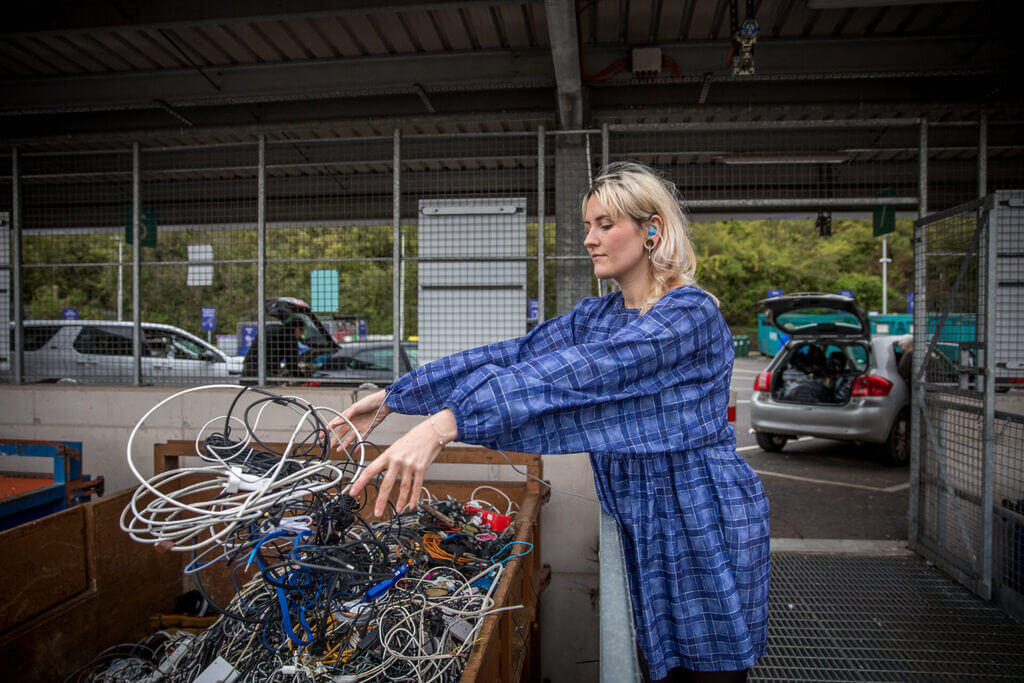
Kirsty is a 26-year-old university staff member from Bristol who lives with her partner in a small flat. Due to their lack of storage space, Kirsty finds herself overwhelmed with all of her old electricals and cables which are stored away in her “bag of doom” – a large travelling rucksack full of hidden copper, laying there taking up needed space in her spare room.
Kirsty’s unused tech consists of a dead laptop, broken blender, an old hoover, broken iPod and more. Tangling up all of these electricals are over ten broken chargers, unknown wires and defunct computer cables. Kirsty has kept hold of some of these electricals for over three years but wants to get rid of them in a responsible and sustainable way.
The reason she keeps hold of them is because she’s considered repairing them or selling them on, but doesn’t have the time or finances to get round to it. Kirsty, wanting to make a positive sustainable change, has recycled her electricals for the first time and freed up some needed space in her flat.
Leroy from Nottingham
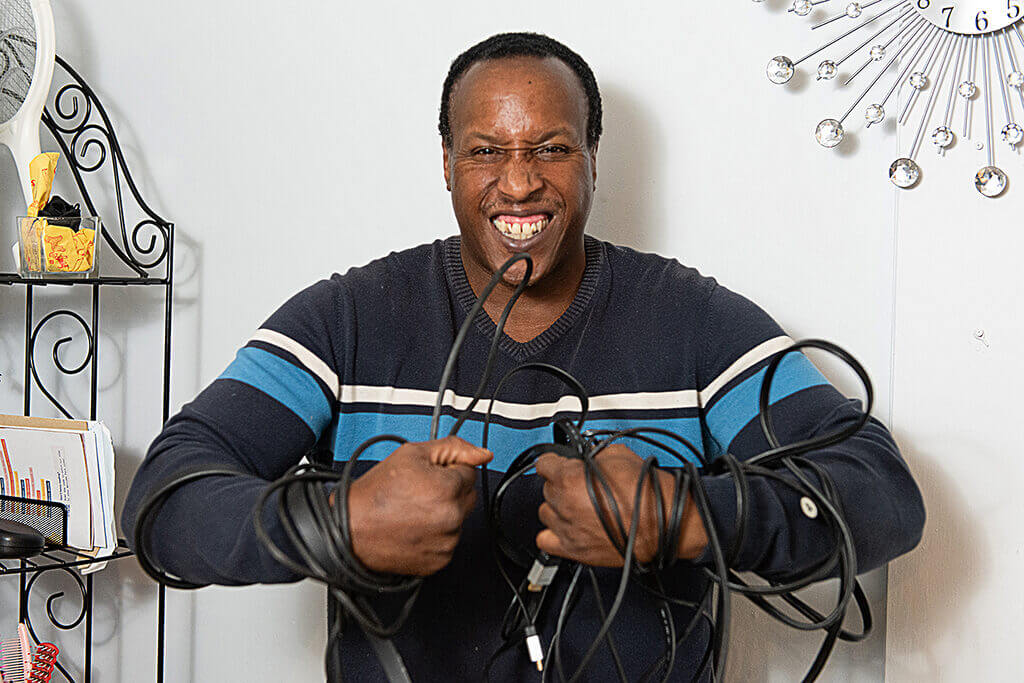
Leroy, 47, is a self-proclaimed tech enthusiast and environmental advocate based in Nottingham, who has always been passionate about recycling and minimising waste.
Leroy estimates to have 50 cables taking up space in drawers and bags in his home, from HDMI cables to old chargers, in what he says resembles a tangled spaghetti bowl. In amongst these cables are unused electricals such as a laptop, a kettle, a broken phone and outdated gadgets.
Leroy participates in an E-waste collection day meet up with his neighbours once a month to get rid of unused electricals and to see which electricals are worth getting fixed. As well as this, he has been to his local recycling drop off point before, and still has electricals and cables to recycle. Leroy is now keen to encourage fellow tech lovers to declutter their homes sustainably.
Melanie from Cumbria
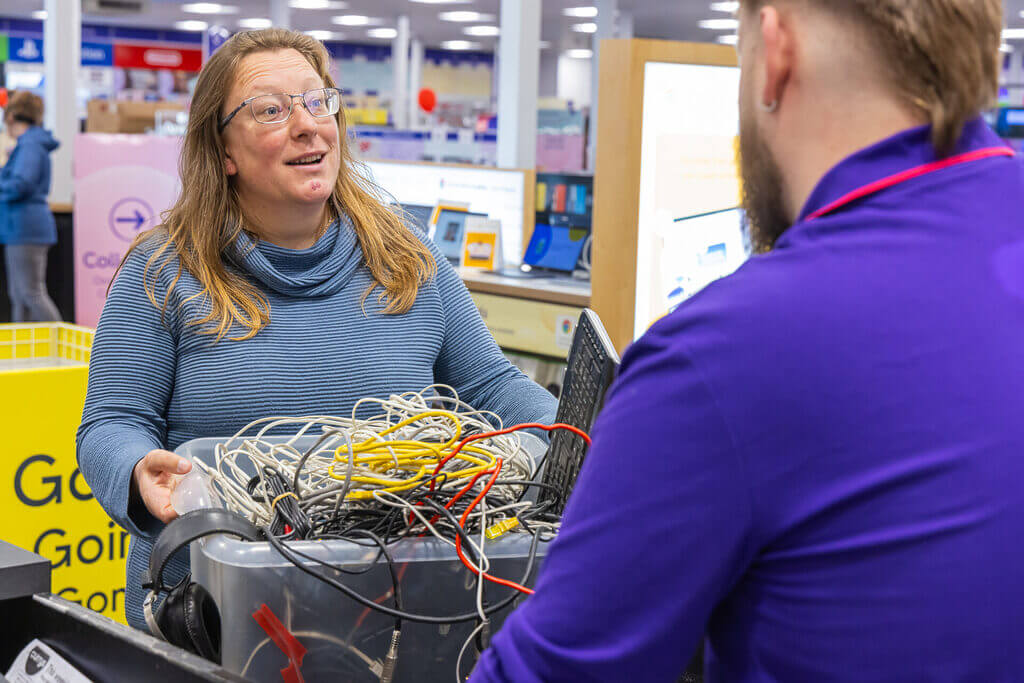
Mel is a 41-year-old NHS staff nurse who has accumulated a lot of tech over the years, especially through her wider work as a musician and open-mic host. Mel’s bulging bags and drawers of doom include 60+ cables, from 20 year old Ethernet and modem cables to chargers and damaged XLR/microphone cables, headphones and mobile phones. She added that she has even kept hold of, but never used, a brand-new landline phone set that is about 16 years old!
Despite being a keen recycler of old batteries and bicycle inner tubes already (through the Cycle 4 Good programme), Mel is keen to break her habit of holding onto old and broken tech just because she believes it might be useful one day or possible to repair. She is only recently aware of just how simple it is to recycle anything with a plug, battery or cable and has already taken her cables to be recycled through a retail take-back scheme as part of the Great Cable Challenge.
Jean Johansson from Scotland
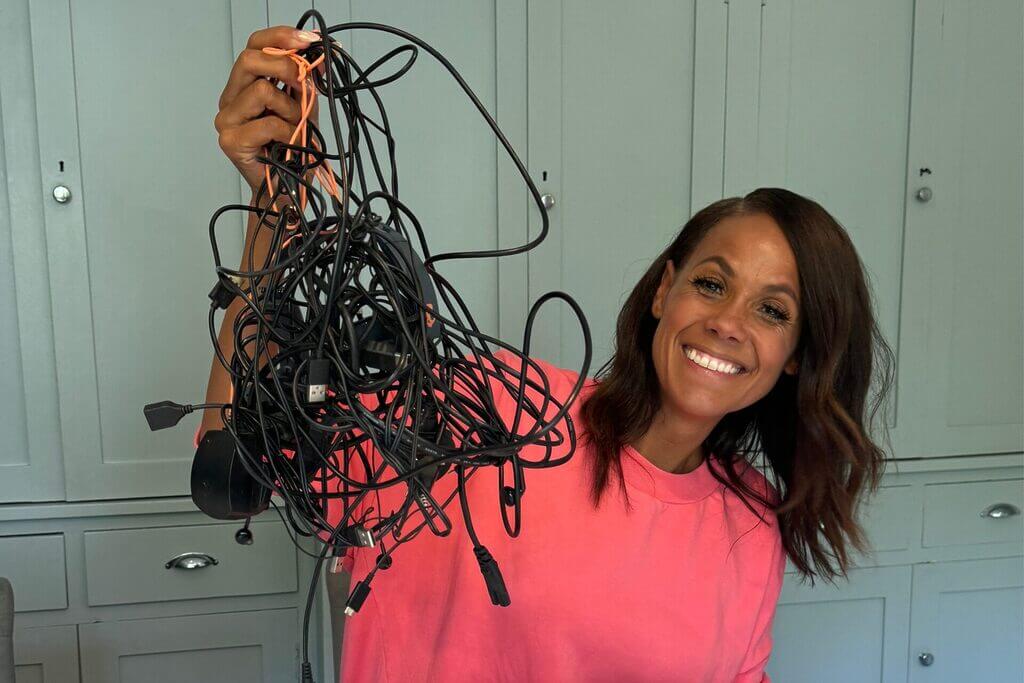
Glaswegian TV Presenter and Broadcast Journalist, Jean Johansson, is known for her roles on flagship Channel 4 show A Place in the Sun, as well as being a regular reporter for The One Show with stints on ITV This Morning.
Jean first started recycling electricals back in 2021, after realising she had a variety of electricals from cheap Black Friday deals. Since then, Jean has been an advocate for recycling electricals, saying it’s just as easy and important as recycling clothes.
Nowadays, Jean has made a habit of rounding up cables and electricals, to take them to her nearest donation point. Noting how easy it is, Jean’s local recycling point is the Co-op in Wemyss bay, which is just a five minute walk from her house.
She’ll fill boxes with about 30-40 cables, with electricals including a hairdryer, kettle, headphones and a blender! Jean also gets her 13 year old son involved, and they enjoy taking the challenge together.
Kids Against Plastic from Nottingham
‘Kids Against Plastic’ was created by Amy and Ella Meek, who started their environmental work when they were just 12 and 10 years old.
Having been concerned about the amount of single-use plastic being used and littered, and the impact it was having on the environment and the wildlife we share this planet with, they took serious action.
They admit that recycling electricals wasn’t the first thing that jumped to mind when addressing issues like plastic pollution and e-waste, but now realise the real impact it can have.
When getting involved in The Great Cable Challenge, Amy and Ella managed to find over 10 cables throughout their house, in various cupboards and drawers. Their local drop off point was their local Curry’s, about 5 minutes away, and they were surprised with how quick the process was.
The young campaigners say they’ve now realised the importance of recycling electricals and how the challenge serves as a reminder to how interlinked issues are, how key it is to be aware and how every bit helps.
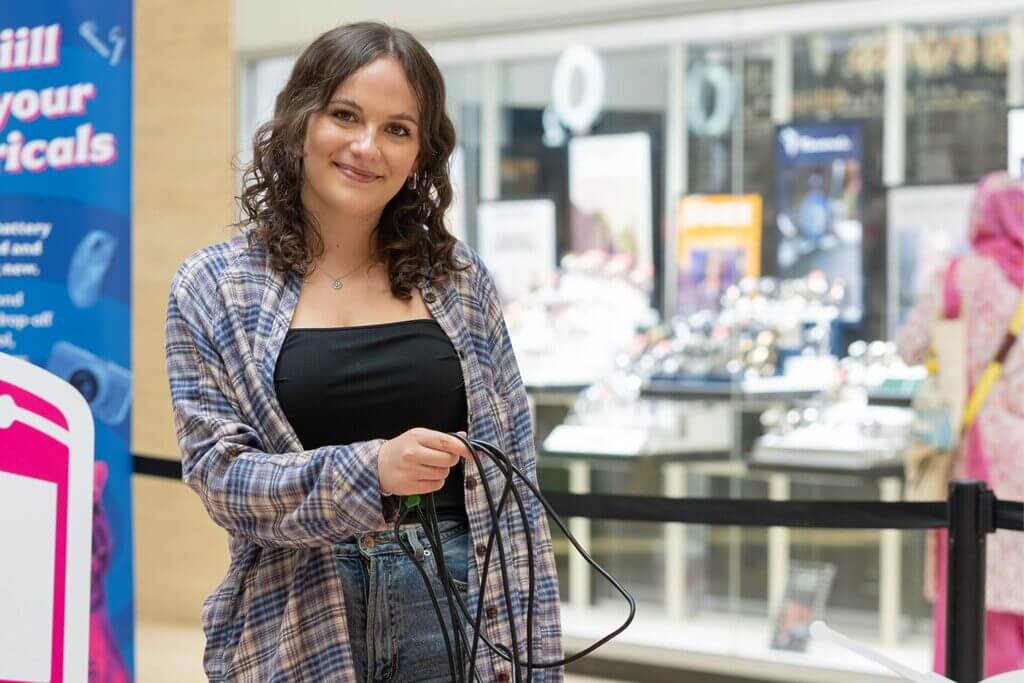
Join the millions taking one small action to make a big difference
So, are you ready to tackle that drawer of doom once and for all? The Great Cable Challenge is here to help you clear out those forgotten cables and give them a new life! Whether you’ve got old phone chargers, tangled HDMI cords, or mysterious wires that you’re not even sure what they belong to, it’s time to bag them up and recycle them. Not only will you free up some much-needed space, but you’ll also be playing a part in building a greener, more sustainable future. Let’s do this—one cable at a time!
Visit our recycling locator to find all your local drop-off points.